
California State Electric Bike Laws
By Brent A. Duque | Last modified on Nov 02, 2026
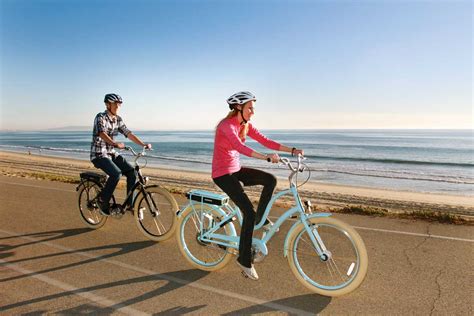
Electric bikes allow riders to ride faster and longer without as much physical energy. Most electric bicycles use motors to augment the pedals, but some use motors exclusively. But did you know that not all states have laws allowing you to ride an electric bike in your town? Electric bicycles (or E-Bikes) look like standard bicycles, except that they are equipped with motors and batteries that propel them rather than pedals alone. And since e-bikes are motor-assisted cycles, most states have some sort of regulations on them.
California Assembly Bill No. 1096 (AB 1096) makes three important classifications in the world of electric bicycles. According to this bill, each of these e-bikes has different features as well as restrictions all users must be aware of. We will detail these distinctions below.
If you dream of zipping around town on an e-bike, you have to know what to do to stay safe on the road and protected under the law. Below, you will find a breakdown of California’s electric bike laws, from helmet and motor requirements to licensing and insurance.
Let’s get started:
California E-Bike Laws at a Glance
| Topic | Rule |
|---|---|
| Driver’s license | Not required |
| Registration / license plate | Not required for a legal e-bike |
| Insurance | Not required by state law for a legal e-bike (see the insurance section below) |
| Motor limit | 750 watts |
| Top assisted speed | 20 mph (Class 1 and Class 2); 28 mph (Class 3) |
| Helmet | Required if under 18 on any e-bike; required for all riders on Class 3 |
| Minimum age | 16 for Class 3 |
| Sidewalks | Only where a regular bicycle is allowed; local rules apply |
How an Electric Bike Is Defined in California
In 2015, California updated its bicycle laws to accommodate electric bicycles. Assembly Bill 1096 defines an electric bicycle as a bike with fully operable pedals and an electric motor up to 750 watts. In California, electric bicycles are regulated in the same way as traditional bicycles. Both vehicles must follow the same rules of the road.
Per the California (CA) Vehicle Code, electric bicycles must not exceed 750W and must not exceed 28 mph on level ground. Electric bikes motors must disengage when brake functions are applied and use a switch or mechanism that, when released, will cause motor function to cease.
3 Classes of Electric Bicycles
AB 1096 makes it clear that e-bikes have the same legal rights and restrictions as bicyclists in California. This means e-bike users must follow the same rules of the road all other cyclists do such as following the speed limit, safely passing other vehicles, and giving the right of way to pedestrians. E-bike users also don’t have to worry about getting a license plate or having a driver’s license to use their bike.
Three classes of electric bikes now exist in the state of California, with laws as to where each type may operate. The previously bill establishes three (3) classes of electric bicycle, based on the speed of the bike and the level of pedal assistance received by the electric motor.
The state defines three classes of e-bikes.
- Class 1 Electric Bike: This bicycle is also known as a “low-speed pedal-assisted electric bicycle.” This is a bicycle equipped with a motor that provides assistance only when the rider is pedaling, and that ceases to provide assistance when the e-bike reaches 20 mph.
- Class 2 Electric Bike: Bicycle equipped with a throttle-actuated motor that ceases to provide assistance when the e-bike reaches 20 mph. This bicycle does not necessarily need assistance from human propulsion by the pedals; the motor is capable of propelling the vehicle on its own.
- Class 3 Electric Bike: This bicycle is also called a “speed pedal-assisted electric bicycle.” This is classified in AB-1096 as an electric bike that receives assistance from a motor only when pedaling, and whose motor stops assisting after the bike is going at least 28 miles per hour. The operation of class 3 electric bicycles shall not be operated on a bicycle path or trail, bikeway, bicycle lane established, equestrian trail, or hiking or recreational trail, unless it is within or adjacent to a roadway or unless the local authority or the governing body of a public agency having jurisdiction over the path or trail permits, by ordinance, that operation 21207.5.(a).
Class 1 vs. Class 2 vs. Class 3 Electric Bikes
| Feature | Class 1 | Class 2 | Class 3 |
|---|---|---|---|
| Motor assist | Pedal-assist only | Throttle can power the bike without pedaling | Pedal-assist only |
| Motor stops assisting at | 20 mph | 20 mph | 28 mph |
| Helmet | Required if under 18 | Required if under 18 | Required for all riders |
| Minimum age | No statewide minimum | No statewide minimum | 16 |
| Bike paths and trails | Generally allowed | Generally allowed; some local trails restrict throttle bikes | Not allowed unless within or adjacent to a roadway, or a local authority permits it |
| Roads and bike lanes | Allowed | Allowed | Allowed |
How To Figure Out What E-Bike You’re Riding
Thankfully for cyclists in the Golden State, California law requires that e-bike manufacturers clearly list key information like the bike’s top speed and design type on a label. If the info is not on the e-bike for some reason, then bikers should get in touch with the manufacturer to be sure of the type of e-bike they are riding.
Do You Need a License to Drive an Electric Bike in California?
You do not need a driver or operator’s license to use an electric bicycle in California. You also do not need to register the bicycle or put on a license plate as you would for a moped or motorcycle. However, you must obey traffic laws when using an electric bike, as you would on a regular bicycle. You must follow stop signs, traffic signals, rights-of-way rules, speed limits, and other laws.
Are There Any Age Restrictions to Ride an Electric Bike in California?
You need to be older than 16 years old to ride an e-bike if your electric bike can reach 28 mph or more.
Do You Have to Wear a Helmet on an Electric Bike in California?
You must wear an approved helmet while operating or riding on an electric bicycle in California if you are 17 or under. If you are 18 or older, you do not need to wear a helmet on a standard bicycle, Class 1 e-bike, or Class 2 e-bike. You must, however, wear a helmet while riding a Class 3 e-bike, moped, or motorcycle. An approved helmet has a Department of Transportation (DOT) sticker ensuring it meets federal safety and quality standards.
Where Can You Ride Your E-Bike?
While we’re on the subject of the different restrictions e-bike types face, it’s important for cyclists to understand the four major bikeways in California and which bikes are allowed on each lane.
- Class 1 Bike Paths are for the exclusive use of cyclists and pedestrians and are off main roads. Probably the most famous Class 1 Bike Paths are paved roads in nature areas. Only Types 1 and 2 e-bikes can go on Class 1 Bike Paths.
- Class 2 Bike Lanes are the protected one-way bike lanes you see on various streets and highways. You will be able to see lines on the ground designating a Class 2 Bike Lane. All three e-bikes are allowed to use Class 2 Bike Lanes.
- Class 3 Bikeways are on roadways, but they don’t have any special markings on the road and can be used by motorists, pedestrians, and cyclists. Usually Class 3 Bikeways are designated with a sign. All three e-bikes are allowed on Class 3 Bikeways.
- Class 4 Bikeways are like Class 2 Bikeways, but they are protected from vehicular traffic with either a space or barrier such as curbs, a parking lane, or a sidewalk. Only Types 1 and 2 e-bikes can use these lanes.
Can You Ride an Electric Bike on the Sidewalk in California?
You may only ride an electric bike on the sidewalk in California if you could do so with a regular bicycle. This eliminates most downtown areas. Although California does not have a statewide law prohibiting bicycles on the sidewalk, local ordinances exist in most cities banning bicycle use on sidewalks in downtown business districts. You can ride an e-bike on a sidewalk in California if street signs expressly grant this right, or if you are in a region that permits this action, such as on private property.
How Fast Do Electric Bikes Go?
Most electric bikes reach a maximum motor-assisted speed of 20 miles per hour. However, some e-bikes can reach 28 miles per hour using their electric motors. Electric bicyclists must obey posted speed limits as they would if they were driving motor vehicles. Otherwise, they could receive speeding tickets from local law enforcement.
Can I Modify My Electric Bike?
It is against the law in California to modify or otherwise tamper with electric bicycles in a way that changes the speed capability, unless the rider also changes the bicycle’s classification. Electric bicycles with motors of more than 750 watts are technically motorcycles according to the law and require Class M licenses and helmets.
What Are Common Injuries Associated With E-Bikes?
Typical electronic bicycle accidents often involve other e-bikes, cars, or pedestrians, and injuries can be extensive, including fatalities. Scientifically speaking, because e-bikes are heavier and faster than conventional bicycles, the force of impact of an e-bike on a pedestrian can be between four and 45 times harder.
Some of the most common types of injuries associated with e-bikes include the following:
- Head, including traumatic brain injury (TBI)
- Back and spinal cord injuries
- Broken bones
- Road rash
- Cuts and bruises
What To Do After an E-Bike Accident
If you are hurt in an e-bike crash, these steps can protect your health and your claim:
- Call 911 and get medical attention, even if your injuries seem minor.
- Report the crash to the police and ask for a copy of the report.
- Take photos of the scene, your injuries, your e-bike and any vehicles involved.
- Exchange contact and insurance information with other drivers, and get contact details from witnesses.
- Keep your e-bike, helmet, battery and damaged gear. Do not repair or discard anything.
- Be careful with insurance adjusters. Avoid recorded statements before you have spoken with an attorney.
- Contact a personal injury attorney soon. Time limits apply to injury claims in California.
Call an E-bike Attorney – CALL DUQUE LAW!
Laws and policies can change at any time rendering the above information outdated and non-applicable. Duque & Price strongly encourages checking with City, County, State and other local agencies for the most recent laws governing the proper, legal use of electric bicycles in your area.
Personal injury cases are difficult and require a skilled attorney. Do not try to take on the insurance company lawyers by yourself. Time limitations apply to any injury claim you might have, so for purposes of investigating a possible case and possibly preserving evidence, it’s best for you to contact us immediately after an accident.
Since our attorneys see many cyclist accidents throughout the year, we know how to obtain fair compensation for your injuries. Contact our experienced Personal Injury Attorneys at 1-877-241-9554 to learn more about your legal options. A free consultation is just a phone call away. You can even use our online contact form, and we will reply to you quickly.

Free Consultation
Fields Marked With An ” *” Are Required

© Copyright 2026 Duque & Price. All rights reserved.
*Images are obtained under license from Canva and other third-party stock image providers, with attribution included where required.
Digital Marketing By 